
Our Story
Rooted in our land, our people survived and continue to thrive today.
We are the Juaneño Band of Mission Indians, Acjachemen Nation - the original people of Orange County, California. For thousands of years, our ancestors lived with deep respect for the land, the waters, and the sacred balance of life. Our identity is rooted in this place, where our culture was born and where our spirit remains strong. We are known as the Acjachemen (pronounced Ah-ha-she-men), and our story is one of endurance. In 1776, the founding of Mission San Juan Capistrano marked the beginning of a painful chapter of colonization, loss, and survival. Our people faced forced removal, cultural suppression, and generations of injustice - but we never disappeared. We are still here. Today, our Nation stands with pride, reclaiming our language, honoring our ancestors, and restoring our connection to the land that has always been ours. We fight to protect sacred sites, teach our youth the truth of who they are, and ensure that the Acjachemen voice is heard - loud, clear, and unapologetic. The spirit of the Acjachemen Nation lives on - in the soil, in the songs, and in the hearts of our people.


Our People
For countless generations, the Acjachemen people have lived where the ocean meets the hills, their lives intertwined with the breath of the land and the rhythm of the tides. Villages once flourished along the creeks, valleys, and shores of what is now Orange County—places where stories were spoken to the stars and gratitude was offered to the earth that sustained them. When the Spanish came in the late 1700s and built Mission San Juan Capistrano, the Acjachemen were called “Juaneño,” yet their true name and spirit endured. Through great change, they carried forward the songs, language, and teachings of their ancestors. Today, their descendants continue to walk these same lands, listening to the whispers of the past, and keeping the Acjachemen story alive—one of resilience, reverence, and an unbroken bond with the land.

The Juaneño Band of Mission Indians, Acjachemen Nation
We remain devoted to honoring our ancestors and safeguarding the lands that have sustained our people since the beginning of our existence. Guided by the echoes of the land —the voices of our ancestors carried through the wind, water, and earth—we continue to uphold our sacred responsibilities through cultural renewal, environmental stewardship, and community empowerment. Our work centers on revitalizing the Acjachemen language, songs, and traditional practices; protecting sacred sites, ancestral villages, and burial grounds; and nurturing our youth and future generations through cultural education and leadership. Through these living practices, we honor the past, strengthen the present, and ensure the enduring spirit of the Acjachemen people carries forward for generations to come.

Puvungna
Puvunga, often called the "place of emergence," is one of the most sacred ancestrai villages of the Acjachemen (Juaneño) and Tongva peoples. Located on the grounds of present-day California State University, Long Beach, this site was not only a thriving settlement but aiso a ceremonial center deeply rooted in creation stories and spiritual traditions. For the Acjachemen, Puvunga remains a living landscape that connects today's people to their ancestors, carrying forward ceremonies, songs, and prayers.
Panhe
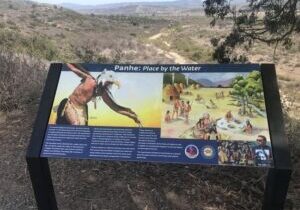
Panhe is an ancient Acjachemen village and ceremonial site located near the mouth of the San Mateo Creek at San Onofre State Beach. With evidence of continuous use for more than 8,000 years, Panhe was a thriving coastal community sustained by the abundance of land and sea. It holds profound spiritual significance as a place where ancestors are buried, ceremonies are conducted, and oral histories are rooted. Today, Panhe is recognized as a sacred site where the Acjachemen continue to gather, pray, and defend their cultural heritage.

Putuidem
Putuidem, located in present-day San Juan Capistrano, was a central village of the Acjachemen Nation. Nestled along San Juan Creek, it served as both a residential and ceremonial hub where families thrived, cultivated the land, and engaged in trade with neighboring villages. Putuidem is particularly significant because it was here that the community endured the early impacts of Spanish colonization, missionization, and displacement with the establishment of Mission San Juan Capistrano. Today, Putuidem is remembered and honored as a place of resilience and survival, with the Acjachemen continuing to teach their history, language, and traditions connected to this village.
Genga/Banning Ranch
Genga, also known as Gengaa or Kengaa, was an Acjachemen village located in the Newport Mesa and Banning Ranch area. This coastal settlement thrived on the rich resources of the estuaries, wetlands, and nearby ocean, sustaining the community with fishing, gathering, and trade. Archaeological evidence and oral histories confirm Genga as a vibrant center of life where generations maintained cultural practices tied to the rhythms of the land and sea. Although much of the land has been threatened by modern development, the memory of Genga endures through preservation efforts and tribal stories that highlight the Acjachemen's enduring connection to their coastal homelands.
Trestles Beach (San Clemente, CA)
Trestles Beach, located along the rugged shoreline of San Clemente, CA, is part of the coastal homelands of the Acjachemen people. This beach, like the surrounding coves and tidepools, provided essential resources such as fish, abalone, and seaweed, sustaining village life and strengthening the connection between land and ocean. For the Juaneño, Trestles Beach is more than a natural landscape - it is a place tied to stories, harvesting practices, and ancestral presence. The beach reflects the balance between community and environment, where people honored the ocean's gifts through careful stewardship and spiritual traditions. Today, Trestles Beach continues to embody the living heritage of the Acjachemen, reminding us of their enduring relationship with the sea.
Other Coastal Beaches and Waterways
From San Onofre and Dana Point to Newport and Laguna have always been central to Acjachemen life. Each cove, bay, and headland carried meaning, providing food, trade goods, and gathering places that sustained villages like Panhe, Putuidem, and Genga. Beyond their material resources, the ocean and its shores were honored in story, song, and ceremony, reflecting the people's deep respect for the balance between land and sea. Today, sites such as Trussell Beach, Doheny, Strands, Newport, and the Laguna coves still carry ancestral presence, reminding the Juaneño people of their enduring ties to the coastline and their role as stewards of these sacred waters.

Tribal Community Involvement
Join us in caring for our ancestral villages, beaches, and waterways. These clean-ups are not only about protecting the land and sea - they are acts of respect for our ancestors and gifts to our future generations.
When we come together as a people, we strengthen our bonds, honor our traditions, and keep our homelands alive. Each hand that helps carries forward the spirit of giving back and the promise of a stronger tomorrow.
Together, we heal, we protect, and we honor our Acjachemen homelands.